 TH
TH EN
ENผลของการที่ไมโครเกลียถูกไฟร์มจากการได้รับอาหารที่มีไขมันสูงต่อการเรียนรู้จดจำในหนูขาว
 13 มีนาคม 2568

บทวิเคราะห์งานวิจัย
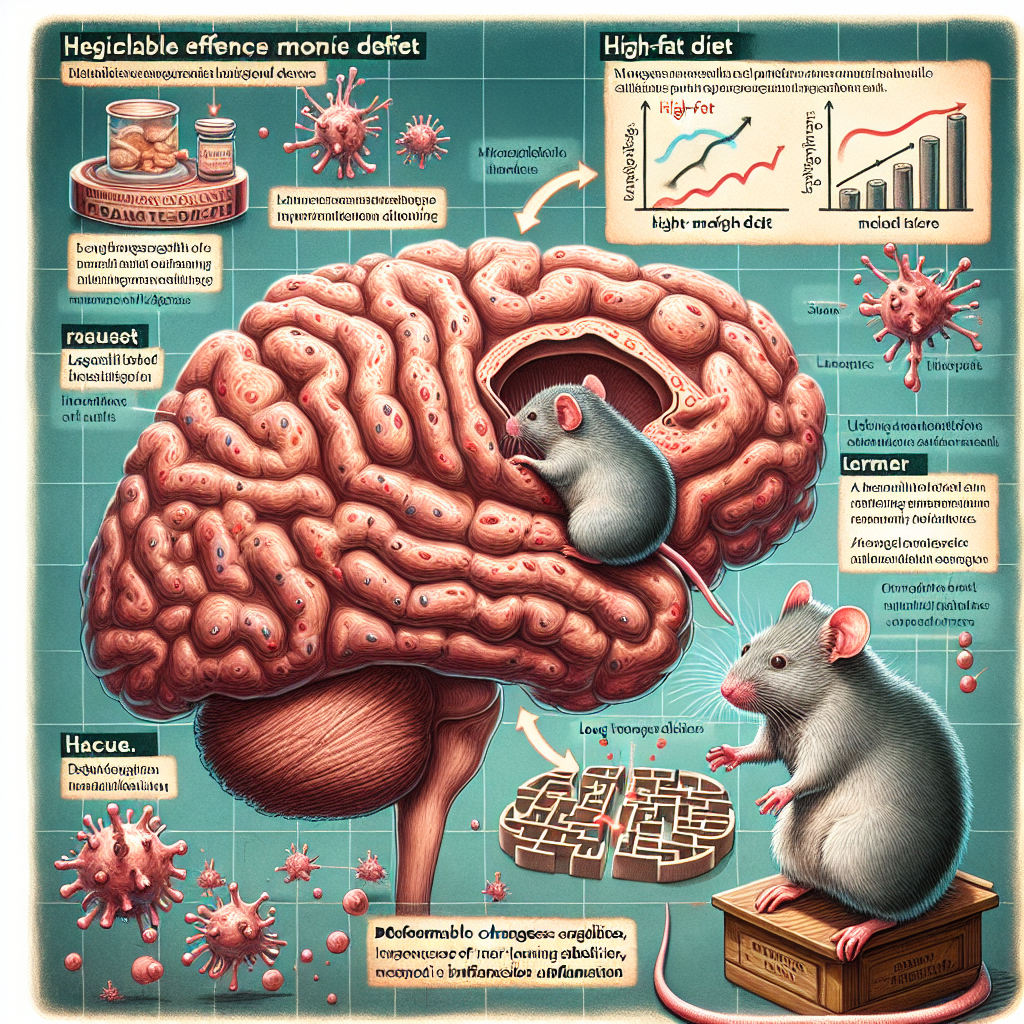
งานวิจัยนี้ศึกษาผลกระทบระยะยาวของการรับประทานอาหารที่มีไขมันสูง (HFD) ต่อการทำงานของไมโครเกลีย (Microglia) ซึ่งเป็นเซลล์ภูมิคุ้มกันในสมอง และผลที่ตามมาต่อการเรียนรู้และความจำในหนูขาว งานวิจัยแบ่งออกเป็น 3 ขั้นตอนหลัก คือ การศึกษาระยะยาวของผลกระทบ การศึกษาผลกระทบในระยะเวลาที่แตกต่างกัน (4 และ 8 สัปดาห์) และการเปรียบเทียบระหว่างการได้รับ HFD อย่างต่อเนื่องกับแบบเป็นช่วงๆ
จุดแข็งของงานวิจัยนี้คือการตรวจสอบผลกระทบอย่างครอบคลุม ไม่เพียงแต่ดูแค่การเปลี่ยนแปลงในด้านความจำเท่านั้น แต่ยังศึกษาผลกระทบต่อหลายมิติของไมโครเกลีย ได้แก่ การเปลี่ยนแปลงโปรไฟล์ (profiles) หน้าที่ (function) รูปร่าง (morphology) การทำงานของไมโทคอนเดรียในสมอง การเชื่อมต่อประสาท (synaptic plasticity) การสร้างเซลล์ประสาทใหม่ (neurogenesis) การตายของเซลล์ (apoptosis) และระดับการอักเสบทั้งในสมองและเลือด การศึกษาเหล่านี้ทำได้โดยการวิเคราะห์ตัวบ่งชี้ทางชีวเคมีและชีวภาพจำนวนมาก เช่น ระดับไซโตไคน์ การทำงานของ phagocytic ความหนาแน่นของ dendritic spine และการแสดงออกของยีนที่เกี่ยวข้อง
การออกแบบงานวิจัยที่แบ่งเป็น 3 ขั้นตอนช่วยให้สามารถศึกษาผลกระทบของ HFD ในระยะเวลาที่แตกต่างกันและรูปแบบการบริโภคที่แตกต่างกัน ช่วยให้เข้าใจกลไกที่อยู่เบื้องหลังผลกระทบที่เกิดขึ้นได้อย่างละเอียดถี่ถ้วนยิ่งขึ้น การศึกษาในระยะเวลา 4 และ 8 สัปดาห์ช่วยให้เห็นถึงความสัมพันธ์ระหว่างระยะเวลาและความรุนแรงของการเปลี่ยนแปลง ในขณะที่การเปรียบเทียบระหว่างการได้รับ HFD อย่างต่อเนื่องกับแบบเป็นช่วงๆ ช่วยให้สามารถระบุรูปแบบการบริโภค HFD ที่มีผลกระทบรุนแรงที่สุดได้
อย่างไรก็ตาม ข้อจำกัดของงานวิจัยนี้คือการใช้หนูขาวเป็นแบบจำลอง ผลลัพธ์อาจไม่สามารถนำไปใช้กับมนุษย์ได้โดยตรง จำเป็นต้องมีการศึกษาเพิ่มเติมในมนุษย์เพื่อยืนยันผลลัพธ์ นอกจากนี้ งานวิจัยนี้ยังเน้นไปที่ผลกระทบของ HFD ต่อไมโครเกลียและระบบประสาทเท่านั้น อาจมีปัจจัยอื่นๆ ที่เกี่ยวข้องกับการลดลงของความจำและการเรียนรู้ เช่น การเปลี่ยนแปลงของฮอร์โมน หรือความเครียด การศึกษาเพิ่มเติมควรพิจารณาปัจจัยเหล่านี้ด้วย
สมมติฐานของงานวิจัยชี้ให้เห็นว่า HFD ทำให้ไมโครเกลียถูกกระตุ้นอย่างต่อเนื่อง (priming) นำไปสู่การอักเสบ การทำงานของไมโทคอนเดรียบกพร่อง การเชื่อมต่อประสาทเสียหาย การตายของเซลล์ และในที่สุดก็ทำให้ความจำและการเรียนรู้เสื่อมลง สมมติฐานเหล่านี้ได้รับการทดสอบอย่างละเอียดผ่านการวัดตัวแปรต่างๆ ดังที่ได้กล่าวไว้ข้างต้น และผลลัพธ์คาดว่าจะสนับสนุนหรือไม่สนับสนุนสมมติฐานเหล่านี้
งานวิจัยนี้เหมาะกับอุตสาหกรรมใด
งานวิจัยนี้เหมาะกับอุตสาหกรรมอาหาร อุตสาหกรรมยา และอุตสาหกรรมเวชภัณฑ์เสริมอาหาร
เหตุผล:
อุตสาหกรรมอาหาร: งานวิจัยนี้ให้ข้อมูลเชิงลึกเกี่ยวกับผลกระทบระยะยาวของอาหารที่มีไขมันสูงต่อสุขภาพสมอง ช่วยให้อุตสาหกรรมอาหารสามารถพัฒนาอาหารที่มีประโยชน์ต่อสุขภาพสมอง และลดผลกระทบเชิงลบจากการบริโภคไขมันสูง เช่น การออกแบบสูตรอาหารที่มีไขมันดี หรือการพัฒนาผลิตภัณฑ์อาหารเสริมที่มีส่วนช่วยในการป้องกันความเสื่อมของสมอง
อุตสาหกรรมยา: งานวิจัยนี้สามารถนำไปสู่การพัฒนาตัวยาใหม่ๆ ที่ช่วยในการรักษาหรือป้องกันโรคที่เกี่ยวข้องกับความเสื่อมของความจำและการเรียนรู้ เช่น โรคอัลไซเมอร์ และโรคสมองเสื่อมอื่นๆ ข้อมูลจากงานวิจัยนี้สามารถใช้ในการออกแบบการทดลองทางคลินิก และการพัฒนายา
อุตสาหกรรมเวชภัณฑ์เสริมอาหาร: ข้อมูลจากการวิจัยสามารถนำมาใช้ในการพัฒนาผลิตภัณฑ์เสริมอาหารที่มีส่วนช่วยในการปกป้องสมองจากผลกระทบของอาหารที่มีไขมันสูง เช่น สารต้านอนุมูลอิสระ หรือสารอาหารที่ช่วยในการสนับสนุนการทำงานของไมโครเกลีย
งานวิจัยนี้เหมาะกับอาชีพใด
งานวิจัยนี้เหมาะกับนักวิจัยทางด้านประสาทวิทยาศาสตร์ นักชีววิทยาเซลล์ นักเภสัชวิทยา และแพทย์ผู้เชี่ยวชาญด้านระบบประสาท
เหตุผล:
นักวิจัยทางด้านประสาทวิทยาศาสตร์: งานวิจัยนี้ให้ข้อมูลเชิงลึกเกี่ยวกับกลไกที่อยู่เบื้องหลังความสัมพันธ์ระหว่างอาหาร การทำงานของไมโครเกลีย และสุขภาพสมอง ช่วยให้นักวิจัยสามารถทำความเข้าใจกระบวนการทางชีววิทยาที่ซับซ้อนได้ดียิ่งขึ้น
นักชีววิทยาเซลล์: งานวิจัยนี้เกี่ยวข้องกับการศึกษาเซลล์ระดับจุลภาค เช่น ไมโครเกลีย และการเปลี่ยนแปลงของเซลล์ ซึ่งเป็นหัวข้อที่สำคัญในสาขาชีววิทยาเซลล์
นักเภสัชวิทยา: ข้อมูลจากงานวิจัยนี้สามารถนำไปใช้ในการพัฒนายาใหม่ๆ หรือการค้นหาสารประกอบที่มีศักยภาพในการรักษาหรือป้องกันโรคที่เกี่ยวข้องกับความเสื่อมของสมอง
แพทย์ผู้เชี่ยวชาญด้านระบบประสาท: งานวิจัยนี้มีประโยชน์ต่อแพทย์ในการทำความเข้าใจสาเหตุและกลไกของโรคระบบประสาทบางชนิด และสามารถนำความรู้ไปใช้ในการวินิจฉัยและรักษาผู้ป่วย
| รหัสโครงการ : | 125060 |
| หัวหน้าโครงการ : | นายฐิติกร จันทร์ไชย |
| ปีงบประมาณ : | 2564 |
| หน่วยงาน : | มหาวิทยาลัยเชียงใหม่ |
| สาขาวิจัย : | กลุ่มข้อมูลด้านวิทยาศาสตร์การแพทย์และสุขภาพ |
| ประเภทโครงการ : | โครงการเดี่ยว |
| สถานะ : | ปิดโครงการ |
| คำสำคัญ : | |
| วัตถุประสงค์ : | 11. Objectives 11.1 Aim 1: To investigate the long-lasting effect of microglial priming by HFD on microglial profiles, microglial function, microglial morphology, brain mitochondrial function, synaptic plasticity, neurogenesis, cell apoptosis, and cognitive function in male Wistar rats Specific aim 1.1: To determine the long-lasting effect of microglial priming by HFD on microglial profiles, serum and brain inflammatory cytokines level in male Wistar rats Hypothesis 1.1: Microglial priming by HFD persistently increase microglial profiles related to activated microglia including apoe and itgax, decrease microglial profiles related to resting microglia including cxcr1 and p2y12, and increase inflammation in both periphery and brain by increasing TNFα, IL-1β, IL-6, IFNγ, p38 MAPK, and p-NFκB/total-NFκB levels. Specific aim 1.2: To determine the long-lasting effect of microglial priming by HFD on phagocytic function in male Wistar rats Hypothesis 1.2: Microglial priming by HFD persistently impair microglial phagocytic function and extracellular clearance debris by increasing colocalization of CD68 and Iba1, decreasing colocalization of amyloid beta and Iba1, and increasing extra cellular amyloid beta level. Specific aim 1.3: To determine the long-lasting effect of microglial priming by HFD on microglial morphology in male Wistar rats Hypothesis 1.3: Microglial priming by HFD persistently alter microglial morphology to ameboid-like shape by increasing microglial cell volume, decreasing microglial processes length, increasing microglial cell number, increasing Iba1 mean fluorescent intensity, and decreasing microglial ramification. Specific aim 1.4: To determine the long-lasting effect of microglial priming by HFD on brain mitochondrial function in male Wistar rats Hypothesis 1.4: Microglial priming by HFD persistently impair brain mitochondrial function by increasing brain mitochondrial reactive oxygen species production, increasing brain mitochondrial membrane potential change, and increase brain mitochondrial swelling. Specific aim 1.5: To determine the long-lasting effect of microglial priming by HFD on synaptic plasticity in male Wistar rats Hypothesis 1.5: Microglial priming by HFD persistently decrease dendritic spine density, decrease synaptic proteins synaptophysin and PSD95 levels, increase microglial synaptic stripping by increasing colocalization of PSD95 and Iba1, increasing C1q, C3, and CR3 protein levels. Specific aim 1.6: To determine the long-lasting effect of microglial priming by HFD on neurogenesis in male Wistar rats Hypothesis 1.6: Microglial priming by HFD persistently decrease BDNF protein expression, decrease p-Trkb/total-Trkb ratio, and decrease DCX positive cells. Specific aim 1.7: To determine the long-lasting effect of microglial priming by HFD on cell apoptosis in male Wistar rats Hypothesis 1.7: Microglial priming by HFD persistently increase cell apoptosis by increasing bax/bac2 protein expression, iecreasing cleaved-caspase3/pro-caspase3 protein expression, and increase TUNEL positive cells. Specific aim 1.8: To determine the long-lasting effect of microglial priming by HFD on cognitive function in male Wistar rats Hypothesis 1.8: Microglial priming by HFD persistently impair cognitive function by decreasing exploration time of novel object in Novel Object Location and Recognition Test. 11.2 Aim 2: To investigate the effect of microglial priming by HFD in time-dependent manner (4- and 8-weeks) on microglial profiles, microglial function, microglial morphology, brain mitochondrial function, synaptic plasticity, neurogenesis, cell apoptosis, and cognitive function in male Wistar rats Specific aim 2.1: To determine the effect of microglial priming by HFD in time-dependent manner (4- and 8-weeks) on microglial profiles, serum and brain inflammatory cytokines level in male Wistar rats Hypothesis 2.1: Microglial priming by HFD increase microglial profiles related to activated microglia including apoe and itgax, decrease microglial profiles related to resting microglia including cxcr1 and p2y12, and increase inflammation in both periphery and brain by increasing TNFα, IL-1β, IL-6, IFNγ, p38 MAPK, and p-NFκB/total-NFκB levels in time-dependent manner. Specific aim 2.2: To determine the effect of microglial priming by HFD in time-dependent manner (4- and 8-weeks) on phagocytic function in male Wistar rats Hypothesis 2.2: Microglial priming by HFD impair microglial phagocytic function and extracellular clearance debris by increasing colocalization of CD68 and Iba1, decreasing colocalization of amyloid beta and Iba1, and increasing extra cellular amyloid beta level in time-dependent manner. Specific aim 2.3: To determine the effect of microglial priming by HFD in time-dependent manner (4- and 8-weeks) on microglial morphology in male Wistar rats Hypothesis 2.3: Microglial priming by HFD alter microglial morphology to ameboid-like shape by increasing microglial cell volume, decreasing microglial processes length, increasing microglial cell number, increasing Iba1 mean fluorescent intensity, and decreasing microglial ramification in time-dependent manner. Specific aim 2.4: To determine the effect of microglial priming by HFD in time-dependent manner (4- and 8-weeks) on brain mitochondrial function in male Wistar rats Hypothesis 2.4: Microglial priming by HFD impair brain mitochondrial function by increasing brain mitochondrial reactive oxygen species production, increasing brain mitochondrial membrane potential change, and increase brain mitochondrial swelling in time-dependent manner. Specific aim 2.5: To determine the effect of microglial priming by HFD in time-dependent manner (4- and 8-weeks) on synaptic plasticity in male Wistar rats Hypothesis 2.5: Microglial priming by HFD decrease dendritic spine density, decrease synaptic proteins synaptophysin and PSD95 levels, increase microglial synaptic stripping by increasing colocalization of PSD95 and Iba1, increasing C1q, C3, and CR3 protein levels in time-dependent manner. Specific aim 2.6: To determine the effect of microglial priming by HFD in time-dependent manner (4- and 8-weeks) on neurogenesis in male Wistar rats Hypothesis 2.6: Microglial priming by HFD decrease BDNF protein expression, decrease p-Trkb/total-Trkb ratio, and decrease DCX positive cells in time-dependent manner. Specific aim 2.7: To determine the effect of microglial priming by HFD in time-dependent manner (4- and 8-weeks) on cell apoptosis in male Wistar rats Hypothesis 2.7: Microglial priming by HFD increase cell apoptosis by increasing bax/bac2 protein expression, increasing cleaved-caspase3/pro-caspase3 protein expression, and increase TUNEL positive cells in time-dependent manner. Specific aim 2.8: To determine the effect of microglial priming by HFD in time-dependent manner (4- and 8-weeks) on cognitive function in male Wistar rats Hypothesis 2.8: Microglial priming by HFD persistently impair cognitive function by decreasing exploration time of novel object in Novel Object Location and Recognition Test in time-dependent manner. 11.3 Aim 3: To compare between chronic and intermittent microglial priming by HFD on microglial profiles, microglial function, microglial morphology, brain mitochondrial function, synaptic plasticity, neurogenesis, cell apoptosis, and cognitive function in male Wistar rats Specific aim 3.1: To compare between chronic and intermittent microglial priming by HFD on microglial profiles, serum and brain inflammatory cytokines level in male Wistar rats Hypothesis 3.1: Chronic microglial priming by HFD worsens microglial profiles alteration, peripheral and brain inflammation compare to intermittent microglial priming. Specific aim 3.2: To compare between chronic and intermittent microglial priming by HFD on phagocytic function in male Wistar rats Hypothesis 3.2: Chronic microglial priming by HFD worsens the impairment of microglial phagocytic function and extracellular clearance debris compare to intermittent microglial priming. Specific aim 3.3: To compare between chronic and intermittent microglial priming by HFD on microglial morphology in male Wistar rats Hypothesis 3.3: Chronic microglial priming by HFD worsens the microglial dysmorphology compare to intermittent microglial priming. Specific aim 3.4: To compare between chronic and intermittent microglial priming by HFD on brain mitochondrial function in male Wistar rats Hypothesis 3.4: Chronic microglial priming by HFD worsens brain mitochondrial dysfunction compare to intermittent microglial priming. Specific aim 3.5: To compare between chronic and intermittent microglial priming by HFD on synaptic plasticity in male Wistar rats Hypothesis 3.5: Chronic microglial priming by HFD worsens synaptic dysplasticity and microglial synaptic stripping compare to intermittent microglial priming. Specific aim 3.6: To compare between chronic and intermittent microglial priming by HFD on neurogenesis in male Wistar rats Hypothesis 3.6: Chronic microglial priming by HFD worsens neurogenesis impairment compare to intermittent microglial priming. Specific aim 3.7: To compare between chronic and intermittent microglial priming by HFD on cell apoptosis in male Wistar rats Hypothesis 3.7: Chronic microglial priming by HFD worsens cell apoptosis compare to intermittent microglial priming. Specific aim 3.8: To compare between chronic and intermittent microglial priming by HFD on cognitive function in male Wistar rats Hypothesis 1.8: Chronic microglial priming by HFD worsens cognitive dysfunction compare to intermittent microglial priming. |
นายฐิติกร จันทร์ไชย. (2564). ผลของการที่ไมโครเกลียถูกไฟร์มจากการได้รับอาหารที่มีไขมันสูงต่อการเรียนรู้จดจำในหนูขาว. มหาวิทยาลัยเชียงใหม่. .
นายฐิติกร จันทร์ไชย. 2564. "ผลของการที่ไมโครเกลียถูกไฟร์มจากการได้รับอาหารที่มีไขมันสูงต่อการเรียนรู้จดจำในหนูขาว". มหาวิทยาลัยเชียงใหม่. .
นายฐิติกร จันทร์ไชย. "ผลของการที่ไมโครเกลียถูกไฟร์มจากการได้รับอาหารที่มีไขมันสูงต่อการเรียนรู้จดจำในหนูขาว". มหาวิทยาลัยเชียงใหม่, 2564. .
นายฐิติกร จันทร์ไชย. ผลของการที่ไมโครเกลียถูกไฟร์มจากการได้รับอาหารที่มีไขมันสูงต่อการเรียนรู้จดจำในหนูขาว. มหาวิทยาลัยเชียงใหม่; 2564. .
Creative Commons : CC

รายการที่เกี่ยวข้อง

OECD : กลุ่มข้อมูลด้านวิทยาศาสตร์การแพทย์และสุขภาพ

OECD : กลุ่มข้อมูลด้านวิทยาศาสตร์การแพทย์และสุขภาพ
